ATFW Spotlights the Forces Reshaping Fitness, Wellness, and Preventative Health in 2026
From behavior science and member retention to public policy, GLP-1 adoption, and global participation trends, All Things Fitness and Wellness examines the pressures and opportunities defining the future of the fitness industry.
As the global fitness and wellness sector moves toward 2026, industry leaders face a convergence of forces that extend far beyond programming and equipment. Shifting consumer behavior, new pharmacological interventions, policy reform, data-driven training models, and changing cultural attitudes toward movement are redefining how fitness businesses operate and how they are perceived within healthcare, government, and society at large.
These themes are at the center of recent programming from All Things Fitness and Wellness (ATFW), a leading Fitness News platform and podcast bringing together CEOs, founders, operators, investors, and innovators from across the fitness, wellness, and longevity ecosystem. Hosted by Krissy Vann, ATFW explores how science, policy, and real-world operator experience intersect, offering practical insight for decision-makers navigating an increasingly complex landscape.
Across two in-depth podcast episodes and a weekly industry briefing, ATFW has recently examined three critical dimensions of the industry’s evolution: the behavioral science behind member retention, the policy and advocacy priorities shaping fitness as essential health infrastructure, and the global data signals emerging from training behavior, consumer preferences, and GLP-1 adoption.
Retention Is a Behavior Problem, Not a Motivation Problem
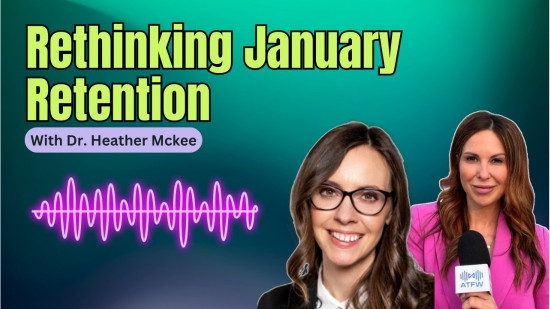
In the episode How Gym Owners Can Actually Retain Members This January, ATFW turns its focus to one of the industry’s most persistent challenges: why the annual surge of January joiners continues to erode within weeks. Joined by behavioral scientist Dr. Heather McKee, the conversation reframes retention not as a failure of willpower on the part of members, but as a systemic issue rooted in how fitness businesses approach early engagement and habit formation.
Drawing on decades of behavioral science research, Dr. McKee explains that much of the industry relies on what is known as the “fresh start effect,” capitalizing on short-lived bursts of extrinsic motivation tied to New Year’s resolutions. While effective at driving sign-ups, this approach often neglects the structures required to turn motivation into durable habits. Without intentional onboarding, appropriate intensity matching, and early reinforcement, new members are left to navigate environments that can feel overwhelming, intimidating, or misaligned with their abilities.
The discussion highlights the critical first 30 to 60 days as an extension of the sales process, not the end of it. According to McKee, gyms that treat onboarding as habit coaching rather than orientation are better positioned to prevent early disengagement. Key risk factors include misaligned workout intensity, lack of perceived competence, insufficient social connection, and data overload from wearables that are introduced without context or guidance.
Importantly, the episode underscores the role of community and real-time feedback in sustaining engagement. Behavioral research shows that visible progress, even when measured subjectively or through effort-based metrics, reinforces intrinsic motivation. When members feel they are progressing at a pace appropriate to them and feel socially connected within the facility, the likelihood of long-term adherence increases dramatically.
The conversation challenges fitness centre operators to rethink where they invest their resources. Rather than focusing solely on capital upgrades or advanced technology, McKee argues that retention gains are often found in human touchpoints, clear behavioral scaffolding, and environments that support belonging across all fitness levels
Fitness as Essential Infrastructure: Policy, Advocacy, and the Road to 2026
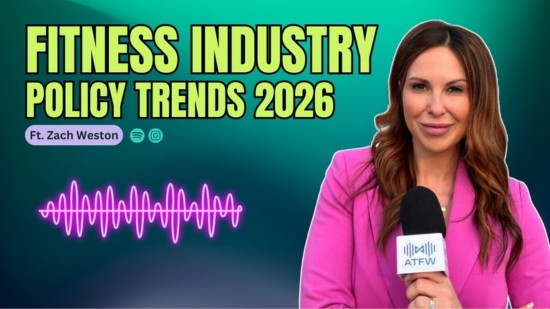
While behavior science addresses what happens inside club walls, ATFW’s episode 2026 Fitness Industry Policy Outlook: Advocacy Priorities with FIC’s Zach Weston zooms out to examine the systemic forces shaping the industry’s external environment. The conversation positions fitness not as a discretionary consumer product, but as an underutilized pillar of preventative health infrastructure.
Zach Weston, Executive Director of the Fitness Industry Council of Canada, outlines a sector defined by both post-pandemic recovery and a growing push for recognition within national healthcare systems. Representing more than 7,000 facilities and millions of members, the Council’s advocacy efforts reflect a broader global trend: fitness is increasingly viewed as a solution to rising chronic disease, mental health challenges, and healthcare system strain.
A central theme of the discussion is affordability. Data from North America and Europe consistently show that cost, not time, is the primary barrier preventing inactive populations from engaging in structured fitness. Weston argues that tax policy reform, such as recognizing fitness expenses as eligible health expenditures or removing sales taxes on memberships and equipment, could materially increase participation while reducing long-term healthcare costs.
The episode also addresses the accelerating integration of fitness with clinical care, particularly in the context of GLP-1 medications for weight management. Weston emphasizes that while pharmacological interventions have demonstrated effectiveness, clinical trials consistently pair medication with supervised exercise. Without strength training and structured movement, GLP-1 use carries risks such as muscle loss and functional decline, reinforcing the need for fitness facilities as partners in treatment rather than optional add-ons.
Beyond policy incentives, the conversation highlights the importance of clinical credibility. Weston points to the absence of standardized operational and professional benchmarks across the fitness sector as a barrier to deeper healthcare integration. Establishing clear standards for staffing, programming, and outcomes could strengthen trust between medical professionals and fitness operators, enabling more formal referral pathways and public-private partnerships.
As governments grapple with rising healthcare expenditures and aging populations, the episode positions fitness operators as stakeholders in public health outcomes, not merely service providers. Advocacy, unified industry voices, and data-driven policy engagement emerge as defining priorities heading into 2026.
The Week in Fitness: Data Signals from a Changing Global Market

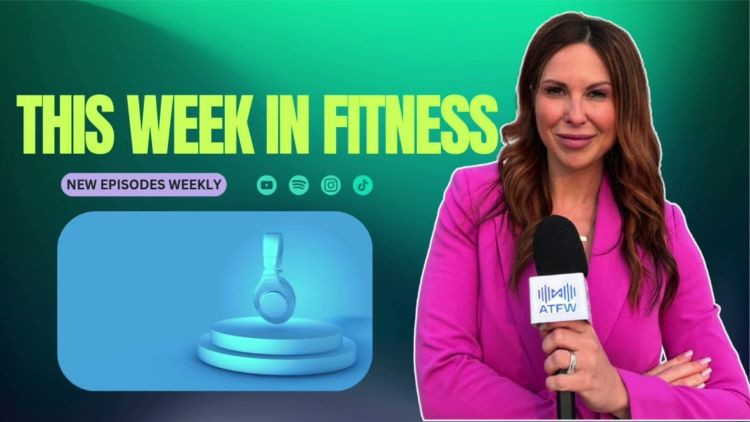
ATFW’s This Week in Fitness provides a snapshot of how global trends are materializing across business, consumer behavior, and policy. The episode synthesizes data from operator expansions, training platforms, participation reports, and public health authorities to reveal a market in transition.
On the business front, leadership and expansion activity signal continued consolidation and international growth. Major players are scaling rapidly across regions, while hybrid training models and adaptive programming are becoming central to competitive differentiation. Data from connected strength platforms shows a shift toward shorter, more intentional workouts, with users prioritizing efficiency and measurable progress over volume.
Participation trends reveal notable generational dynamics. While Pilates and strength training continue to dominate global bookings, play-based and event-driven fitness models are surging, particularly among younger demographics. Platforms like Strava report explosive growth in clubs and group-based activities, underscoring the social dimension of modern fitness engagement.
The episode also examines the evolving weight-loss landscape. Surveys indicate widespread dissatisfaction with traditional dieting approaches, alongside growing normalization of GLP-1 use. Importantly, perceptions of these medications appear to be shaped less by advertising and more by personal networks, highlighting how social trust influences health decisions.
At the policy level, the release of the World Health Organization’s first global guidelines on GLP-1 therapies marks a significant moment. By recognizing obesity as a chronic disease requiring long-term, comprehensive care, the guidance reinforces themes echoed throughout ATFW programming: medication alone is insufficient without behavioral support, movement, and accessible infrastructure.
Taken together, the week’s data paints a picture of an industry balancing innovation with responsibility, growth with credibility, and personalization with scale.
A Platform for an Industry at a Crossroads
Across these episodes, a consistent narrative emerges. The fitness industry is no longer defined solely by facilities, classes, or aesthetics. It is increasingly shaped by behavior science, healthcare integration, public policy, and cultural shifts in how people relate to movement, health, and community.
All Things Fitness and Wellness positions itself at this intersection, providing a forum where operators, executives, and innovators can engage with ideas that influence both day-to-day decision-making and long-term strategy. By connecting insights from behavioral science, advocacy leadership, and real-time industry data, ATFW reflects an industry in the midst of redefining its role.
As the sector looks toward 2026, the questions raised across these conversations are unlikely to fade. How can gyms move beyond transactional membership models to support lifelong habits? What responsibilities do operators hold as fitness becomes embedded in healthcare pathways? And how can the industry align growth with trust, accessibility, and measurable impact?
Through ongoing dialogue and analysis, ATFW continues to explore these questions, offering clarity in a period of rapid change. New episodes of the ATFW Podcast are available on YouTube, Spotify, and Apple Podcasts, delivering weekly perspectives on the trends shaping the future of fitness and wellness.