
Mass Timber Construction: How Canada Is Building the Future, One Forest at a Time
TORONTO, ON / ACCESS Newswire / March 13, 2026 / Canada is experiencing a quiet revolution in the way it builds. From the soaring wooden towers rising above Vancouver's skyline to the pioneering mixed-use developments reshaping downtowns across Ontario and Quebec, mass timber construction has emerged as one of the most exciting and consequential shifts in Canadian real estate development in a generation. For developers and investors paying attention, the opportunity is significant - and the moment to act is now.
Mass timber refers to a category of engineered wood products - including cross-laminated timber (CLT), glued-laminated timber (glulam), and nail-laminated timber (NLT) - that are manufactured to handle the structural demands of large-scale residential and commercial buildings. Unlike traditional stick-frame construction, mass timber can support mid-rise and high-rise structures, opening the door to wood-based construction in building typologies long dominated by concrete and steel.
- - -
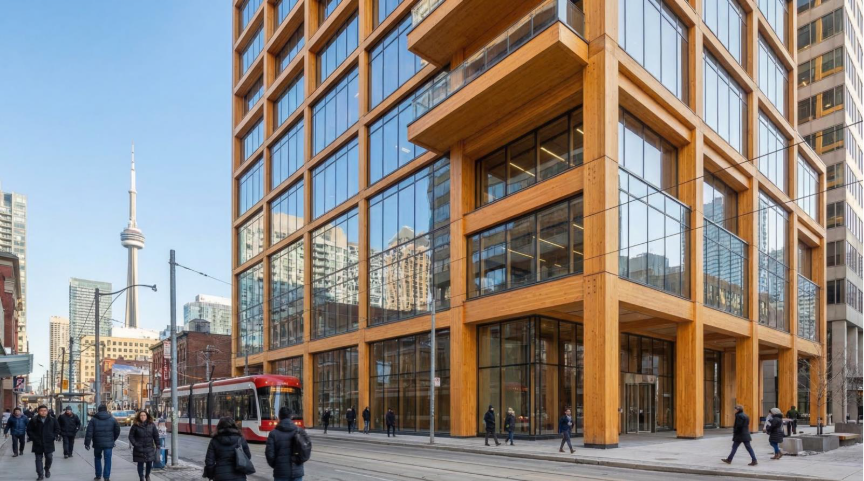
Fig. 1 - Mass timber high-rise development in downtown Toronto
- - -
"Mass timber isn't just a building material - it's a philosophy about how we develop responsibly," says Ladan Hosseinzadeh Sadeghi, President & CEO of Sky Property Group Inc. "Canada has a world-class forestry sector, a rigorous regulatory environment, and a genuine commitment to sustainability. Mass timber is the natural convergence of all three, and the development community needs to lean into it."
Canada at the Forefront
Canada is not merely a participant in the mass timber movement - it is one of its architects. The country's vast boreal and coastal forests provide an abundant and, when managed properly, renewable source of raw material. British Columbia has been the epicentre of innovation, home to landmark projects like the Brock Commons Tallwood House at the University of British Columbia - an 18-storey mass timber residence that, when completed in 2017, was among the tallest wood buildings in the world.
Since then, the National Building Code of Canada has progressively updated its provisions to allow taller mass timber structures. The 2020 edition expanded the permitted height of encapsulated mass timber construction to twelve storeys, with ongoing regulatory conversations pointing toward even greater heights in future code cycles. Provincial building codes across Ontario, Quebec, Alberta, and British Columbia have largely aligned to reflect these changes, creating a more consistent national framework for developers.
For Ladan Hosseinzadeh Sadeghi and the team at Sky Property Group, the regulatory trajectory matters as much as the material itself. "Developers operate on long time horizons," she explains. "When you see the National Building Code moving consistently in one direction - toward greater flexibility for mass timber - that tells you where the industry is heading. Smart capital positions ahead of that curve."
The Sustainability Case Is Ironclad
The environmental argument for mass timber is compelling and, increasingly, quantifiable. Concrete production is responsible for approximately 8% of global CO2 emissions, while steel manufacturing is similarly carbon-intensive. Mass timber, by contrast, sequesters carbon - trees absorb CO2 as they grow, and that carbon remains locked within the wood structure of a building for its entire lifecycle.
Research from the University of British Columbia and other Canadian institutions has consistently found that mass timber buildings generate substantially lower embodied carbon than equivalent concrete or steel structures - often 40% to 70% lower, depending on the application. As Canadian municipalities and the federal government intensify their focus on embodied carbon in addition to operational carbon, this advantage becomes a competitive differentiator for developers.
- - -
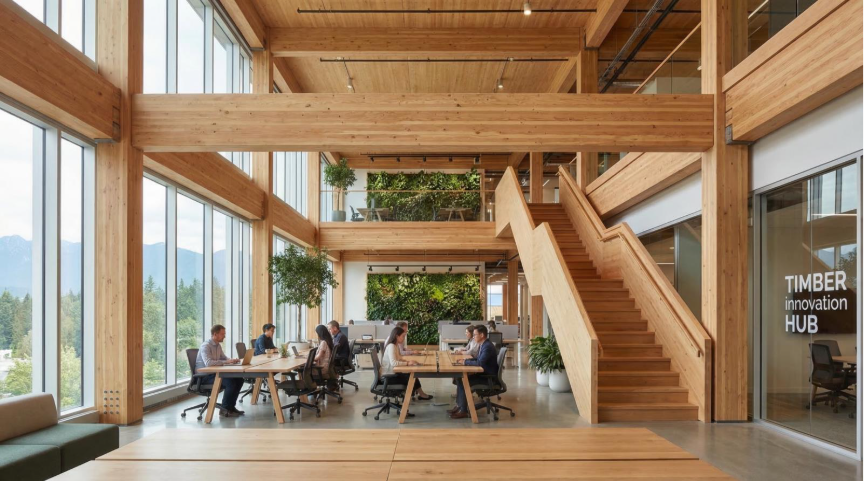
Fig. 2 - Exposed CLT beams in a Canadian mass timber office interior
- - -
"We're entering an era where embodied carbon will be scrutinized as carefully as energy efficiency," says Ladan Hosseinzadeh Sadeghi. "Developers who build with mass timber now are building relationships with a regulatory environment that is only going to reward low-carbon construction more aggressively going forward. It's not altruism - it's strategy."
Beyond carbon, mass timber offers measurable benefits in construction speed, cost predictability, and worker safety. The precision manufacturing of CLT and glulam panels in controlled factory environments reduces on-site waste, shortens construction schedules, and limits the unpredictability that plagues traditional poured-concrete projects. In a Canadian market where construction cost overruns and labour shortages remain persistent challenges, these operational advantages carry real financial weight.
Economic Opportunity Across the Value Chain
The mass timber opportunity extends well beyond individual development projects. Canada's forest products industry - which employs hundreds of thousands of Canadians and generates tens of billions in annual export revenue - is actively investing in mass timber manufacturing capacity. New CLT and glulam facilities have opened or expanded in British Columbia, Alberta, Ontario, and Quebec, creating a domestic supply chain that reduces both costs and lead times for developers.
Indigenous communities and forestry partnerships represent another critical dimension of the opportunity. Many of the most significant mass timber projects in Canada are being developed in partnership with First Nations communities that hold forestry rights, creating economic development vehicles that align with reconciliation commitments while producing real estate assets of lasting value.
"There's an enormous opportunity to align mass timber development with Indigenous economic partnership in ways that create generational wealth for communities that have historically been excluded from the development equation," notes Ladan Hosseinzadeh Sadeghi. "Sky Property Group is actively exploring these kinds of collaborative structures, because we believe the best development is the kind that builds communities, not just buildings."
Market Momentum and Investment Signals
- - -
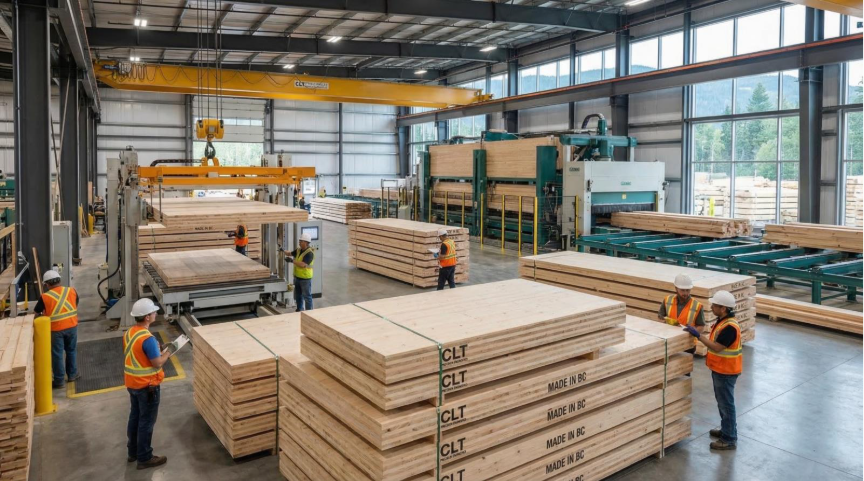
Fig. 3 - Cross-laminated timber manufacturing facility, British Columbia
- - -
Institutional investors and major pension funds - among the most disciplined capital allocators in Canada - are increasingly incorporating mass timber into their real estate portfolios. The combination of ESG alignment, strong tenant demand (particularly from technology companies and progressive employers seeking distinctive, healthy workplaces), and favourable regulatory trends makes mass timber an asset class with durable appeal.
Office and mixed-use mass timber developments consistently report higher tenant retention rates and premium rents compared to conventional construction. Residential mass timber buildings attract buyers and renters who place a premium on both aesthetic warmth and environmental credentials - a demographic segment growing rapidly across Canadian urban centres.
- - -
- - -
"The market is sending a clear signal," says Ladan Hosseinzadeh Sadeghi. "Tenants want it. Municipalities want it. The code supports it. The supply chain is maturing. For developers who are still on the fence about mass timber, I would ask: what are you waiting for?"
Looking Ahead
As Canada navigates the ongoing pressures of housing affordability, urban intensification, and decarbonization, mass timber represents a rare solution that advances multiple policy and market objectives simultaneously. It delivers density, sustainability, speed, and economic development in a single structural system - a combination that no other building material currently matches.
For Ladan Hosseinzadeh Sadeghi and Sky Property Group Inc., the path forward is clear. "We are committed to integrating mass timber into our development pipeline wherever it makes sense," she says. "Not because it's fashionable, but because it's the right way to build for the next fifty years in this country. Canada gave the world this material. It's time we built our cities with it."
- - -
About Sky Property Group Inc.
Sky Property Group Inc. is a Toronto-based real estate development and property management company specializing in land assembly and high-density residential development across the Greater Toronto Area. Led by President & CEO Ladan Hosseinzadeh Sadeghi, the company is committed to sustainable, community-minded development that creates lasting value for investors, residents, and municipalities alike.
Media Contact:
Ladan Hosseinzadeh Sadeghi
[email protected]
SOURCE: Sky Property Group Inc.
Information contained on this page is provided by an independent third-party content provider. XPRMedia and this Site make no warranties or representations in connection therewith. If you are affiliated with this page and would like it removed please contact [email protected]
